

 Home
Home Explore Offer
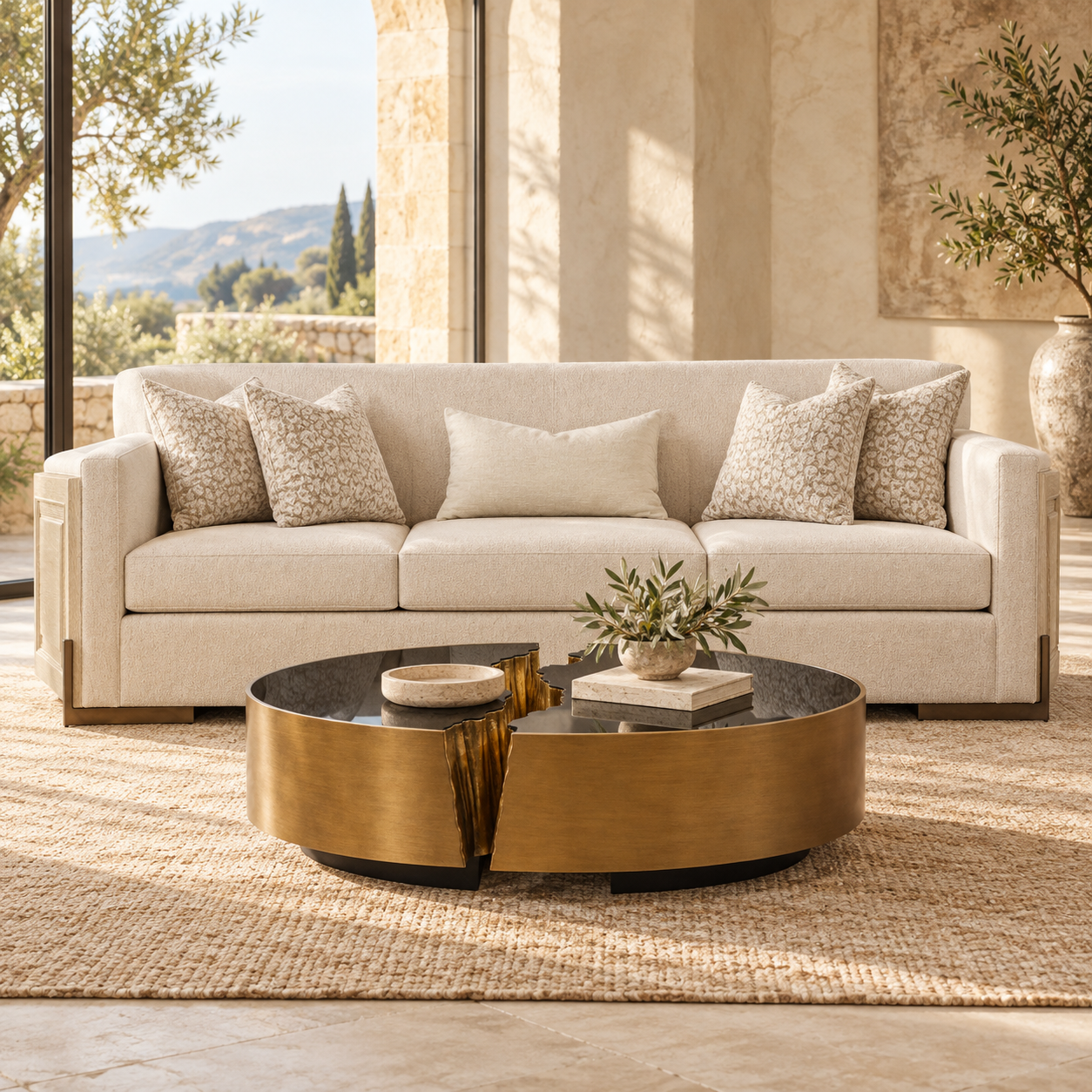 Living room
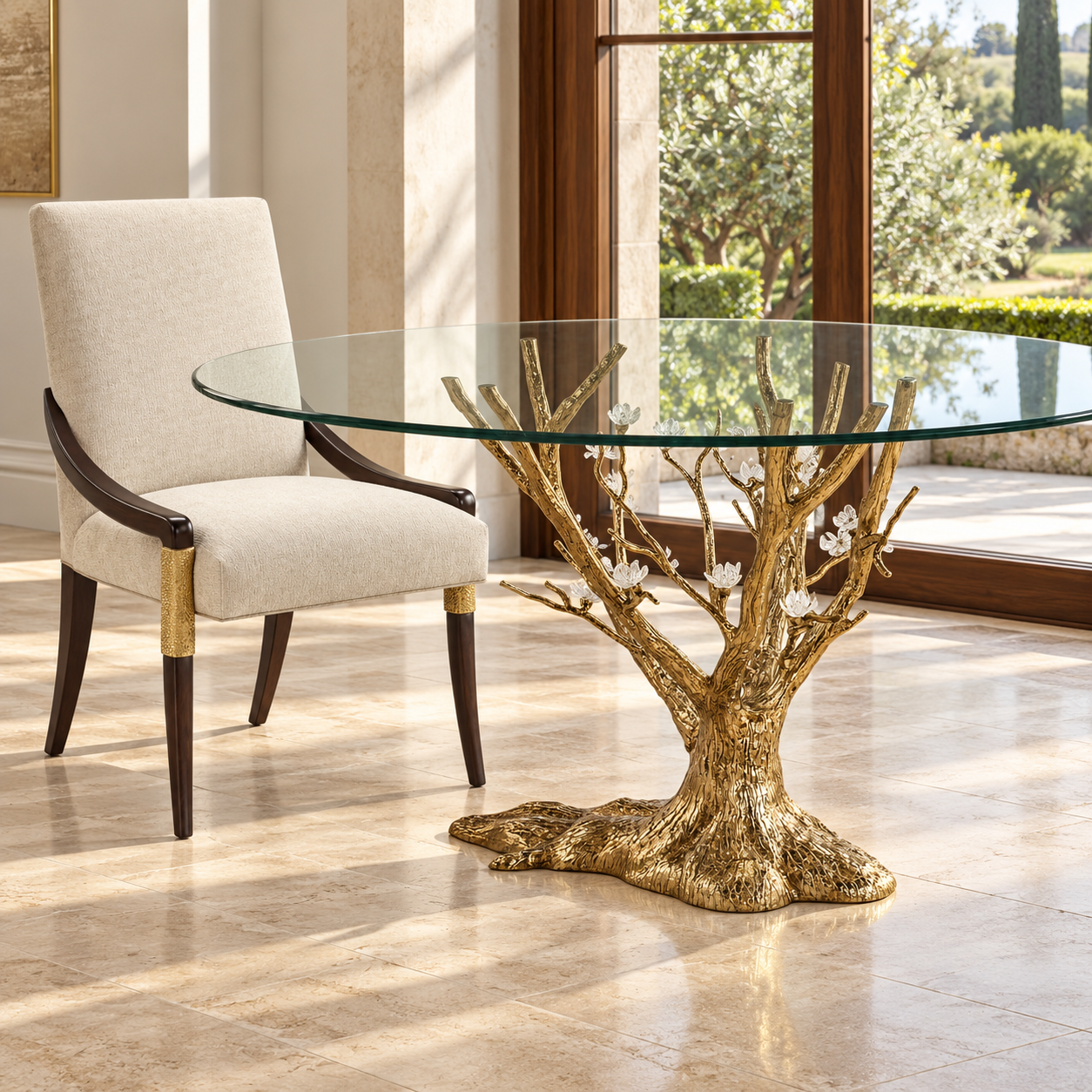 Dining room
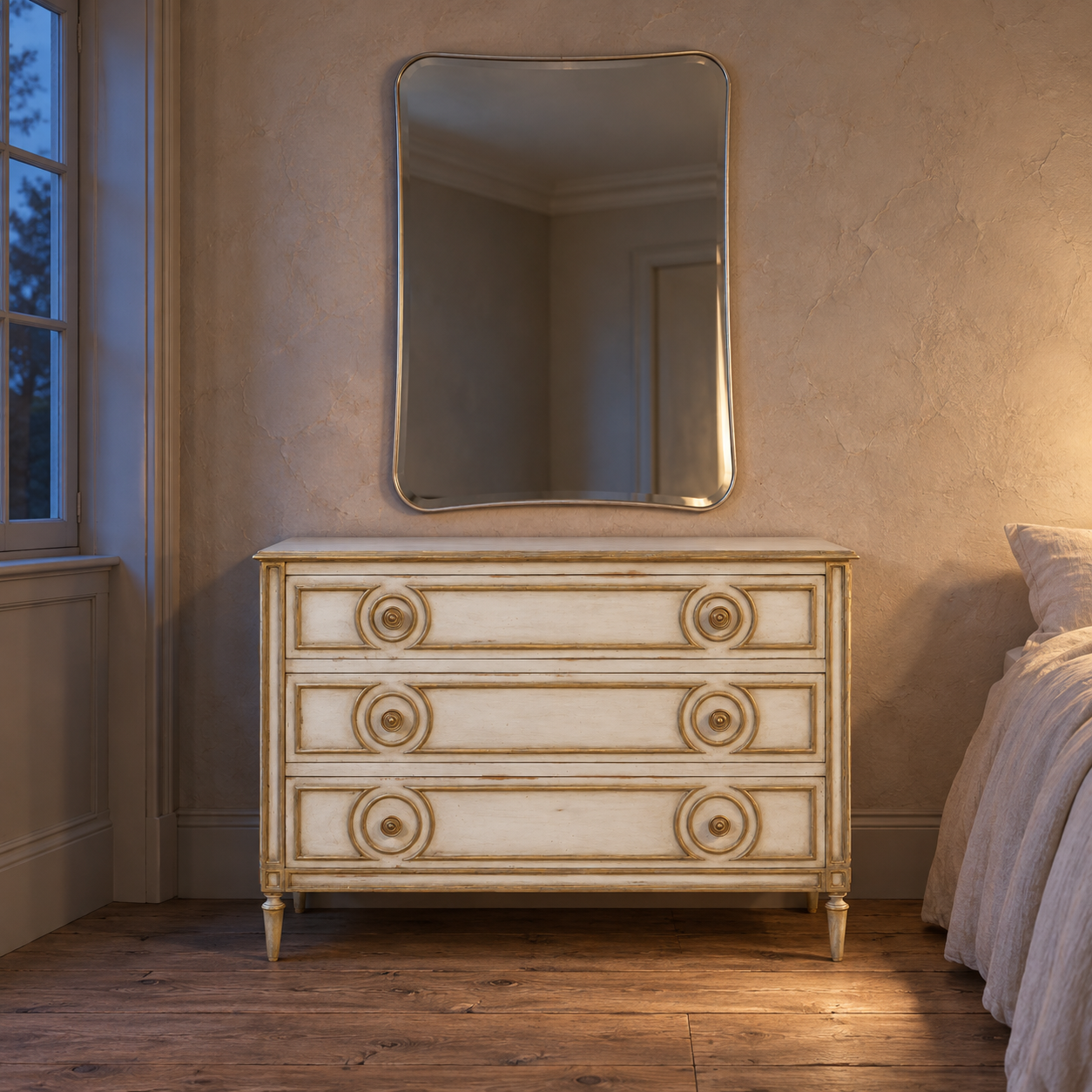 Bedroom
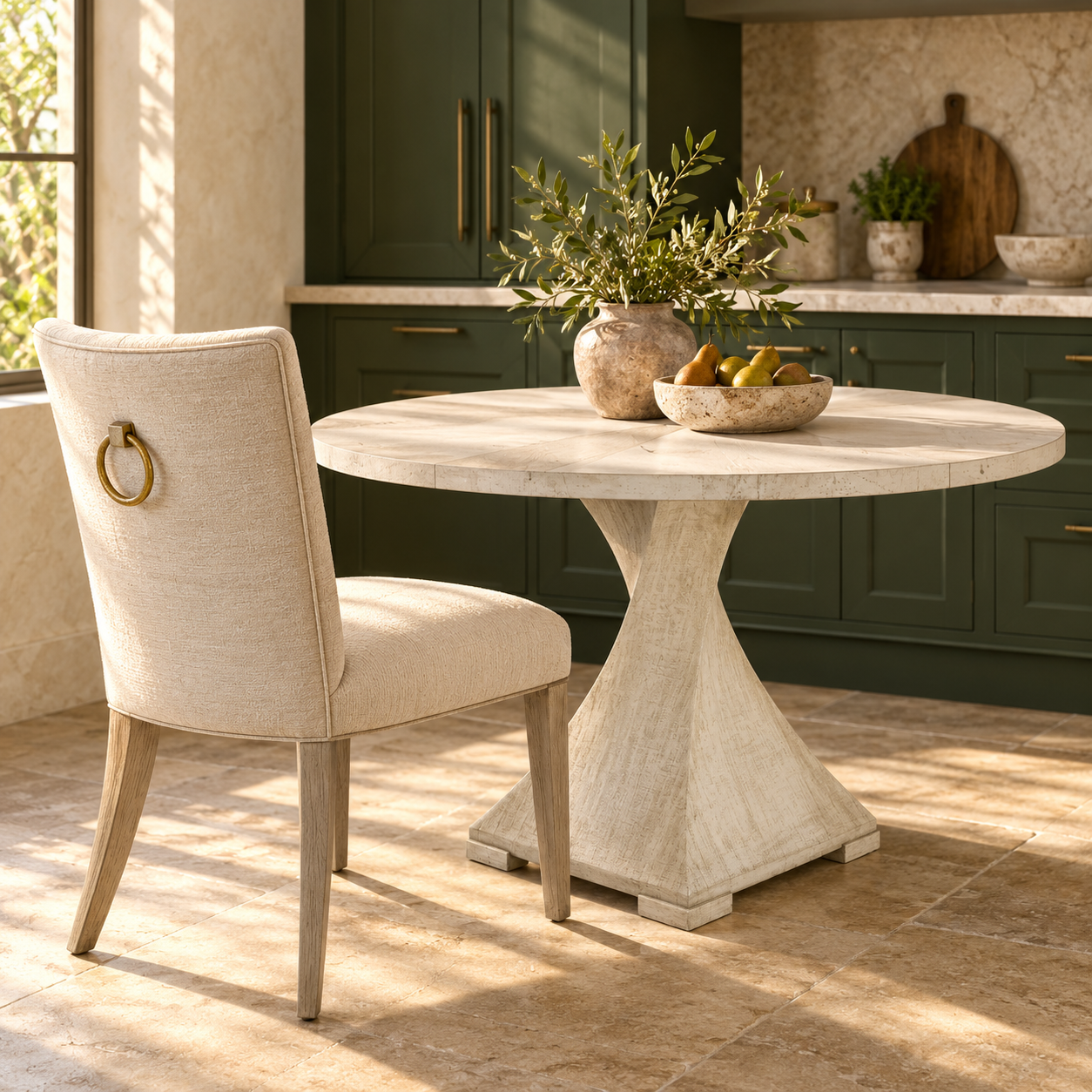 Kitchen
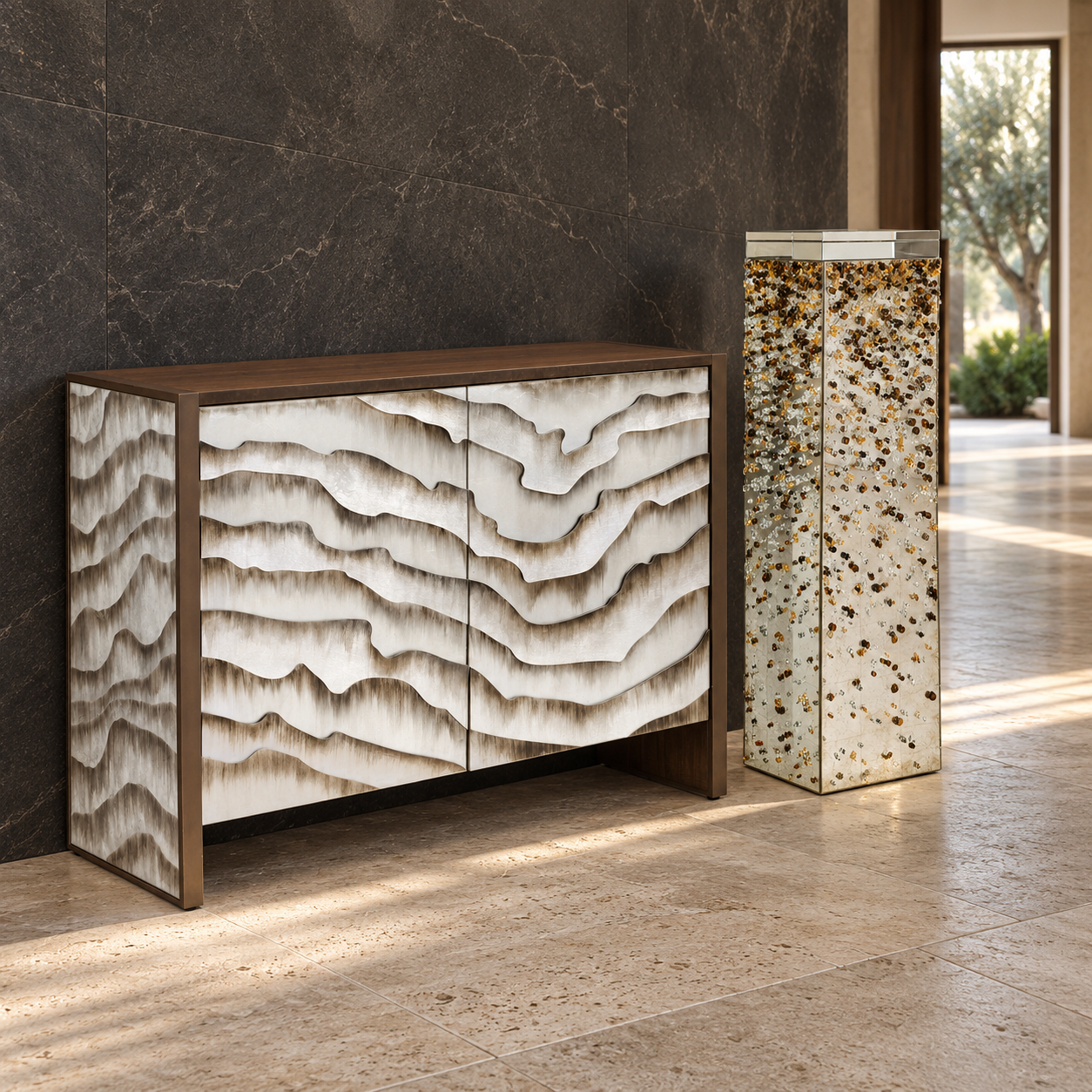 Hallway
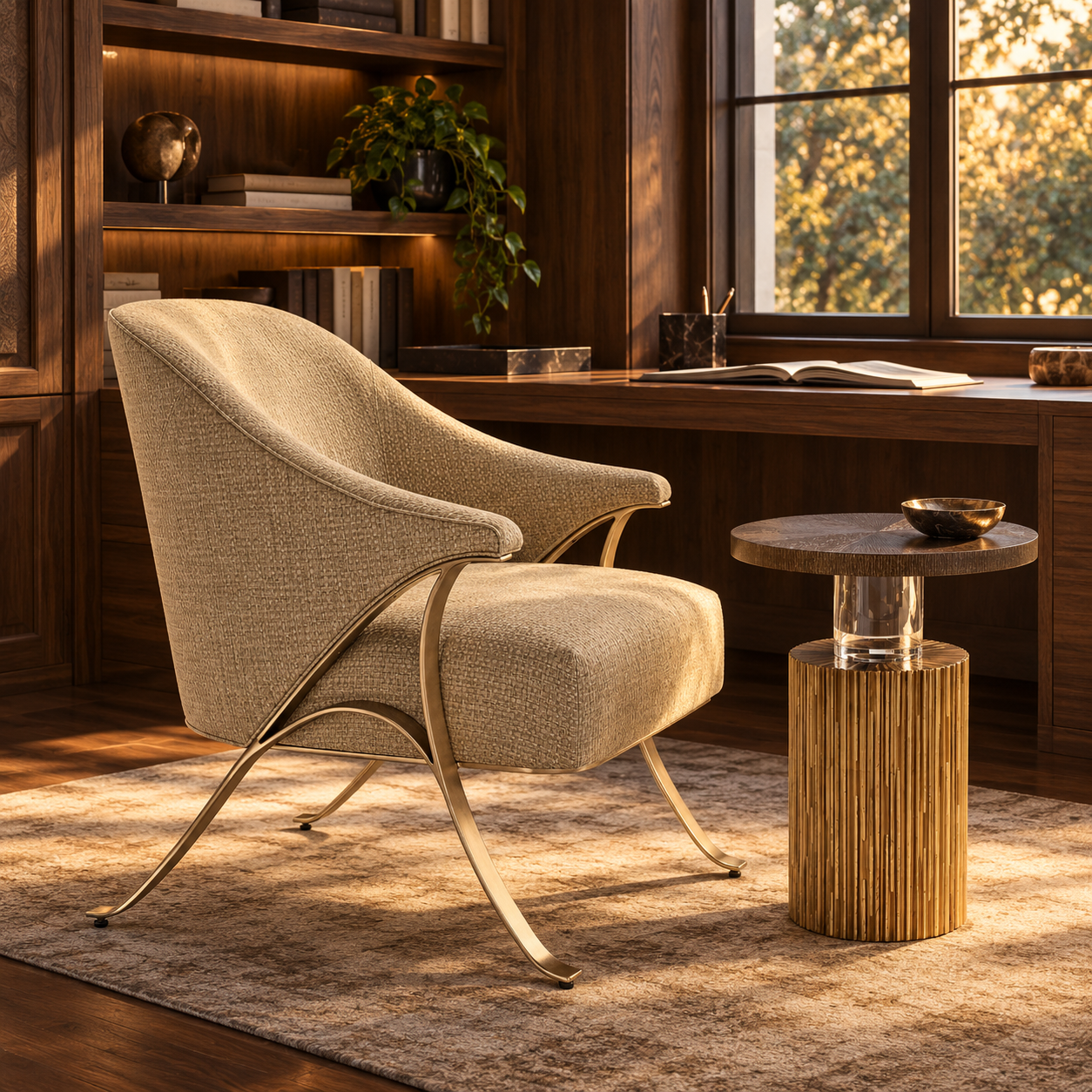 Study
Study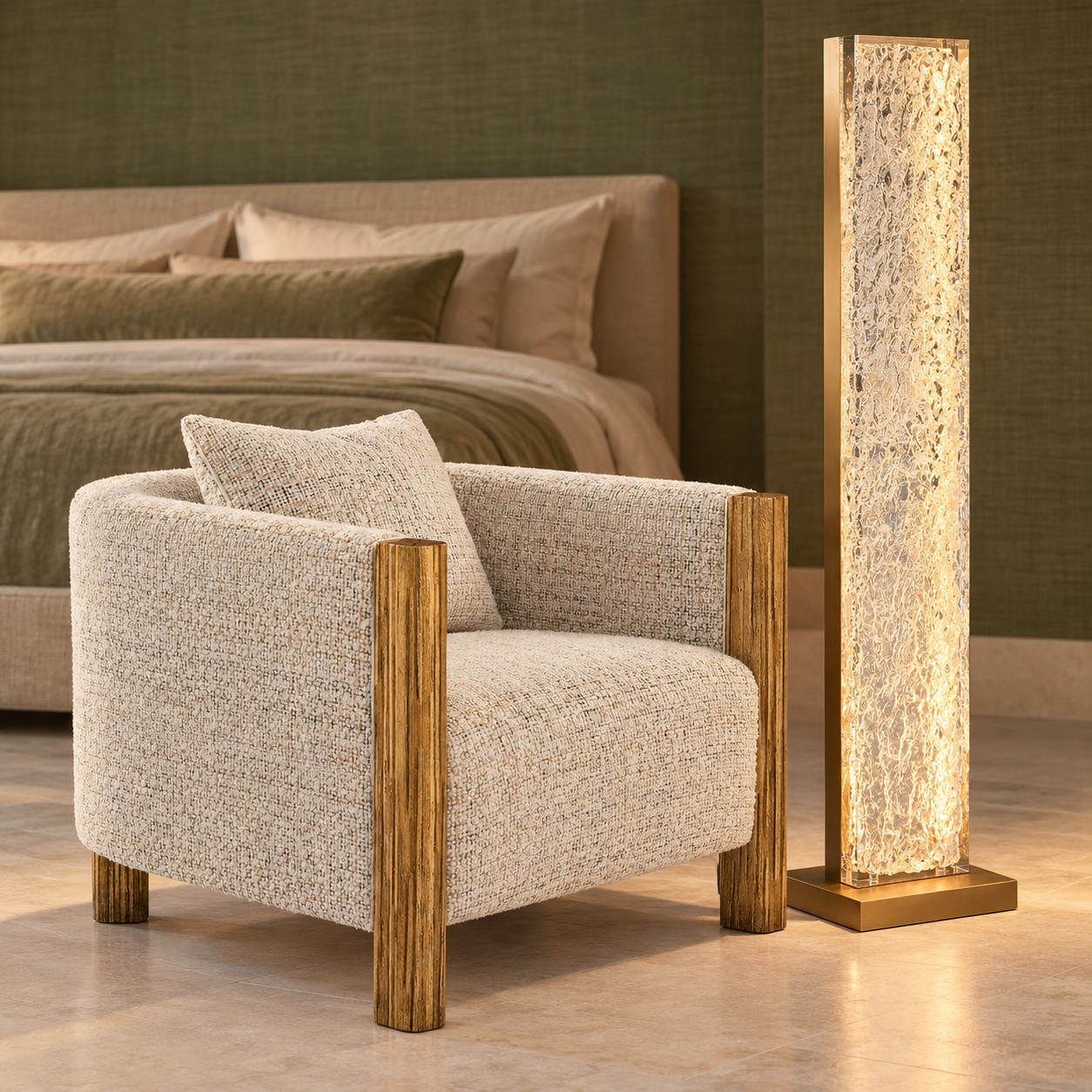 Guest room
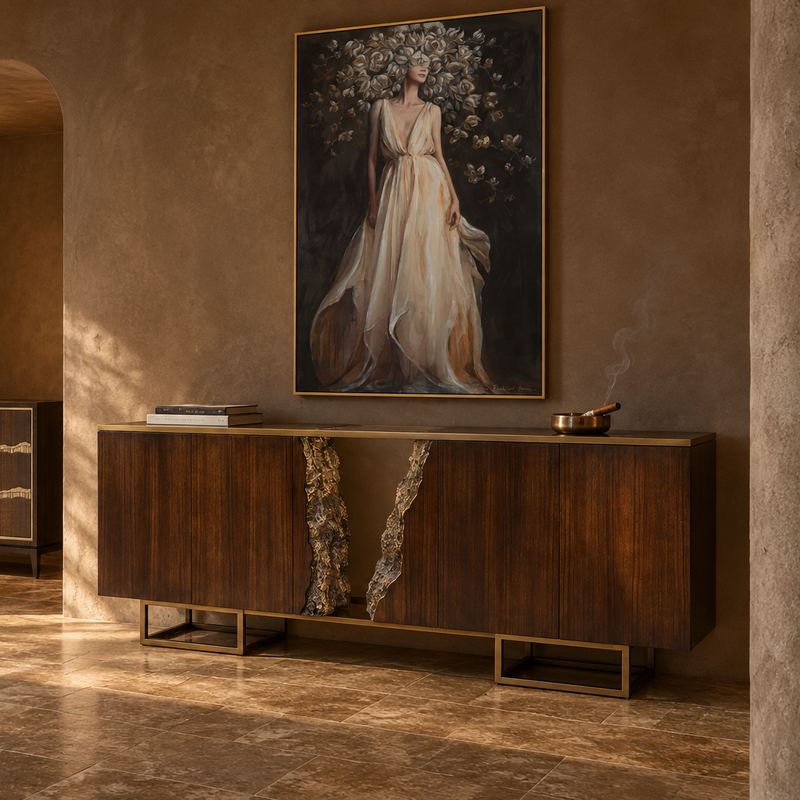 Earthen Retreat
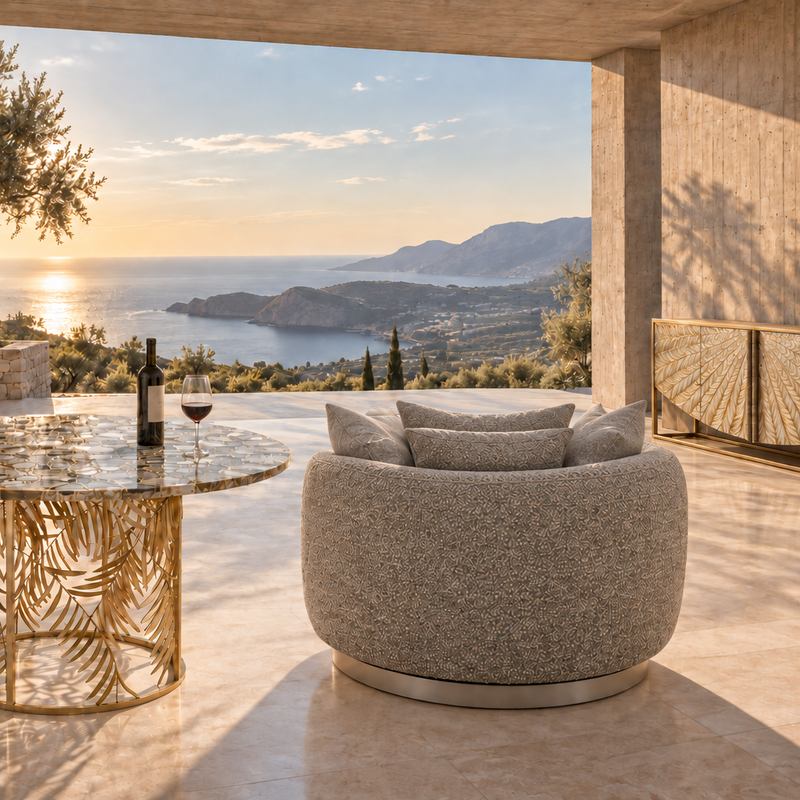 Sculptural Silence
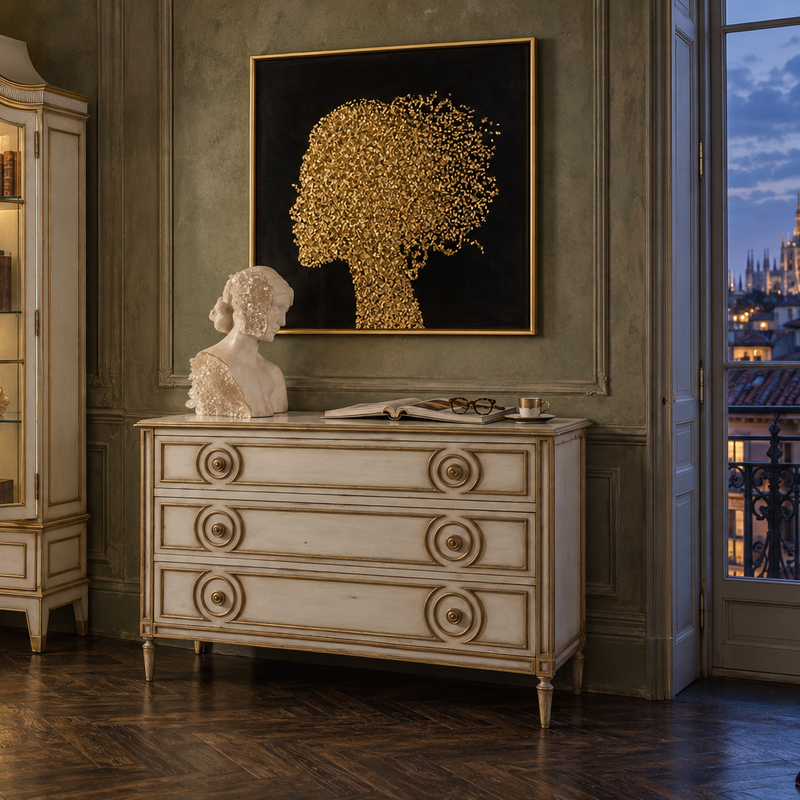 Modern Grand Tour
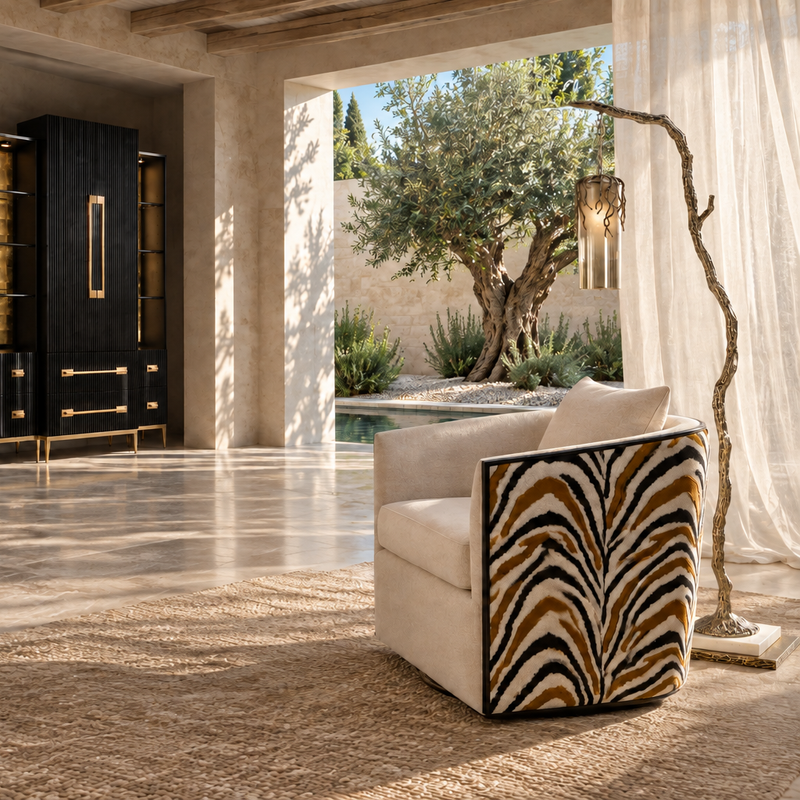 Sunlit Stillness
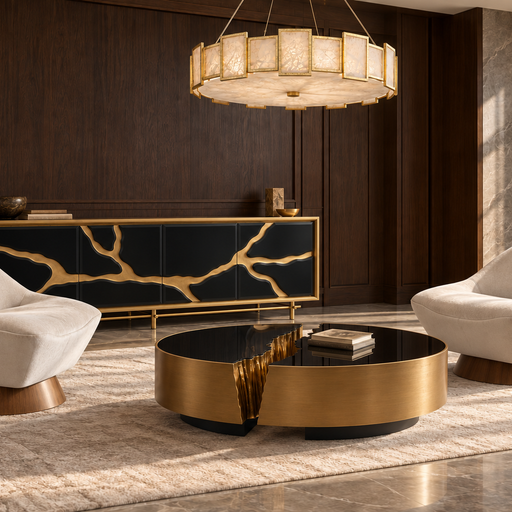 The Collector’s Apartment
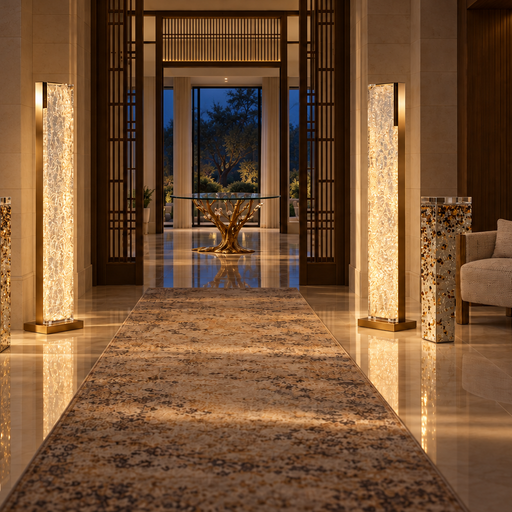 Grand Villa Arrival
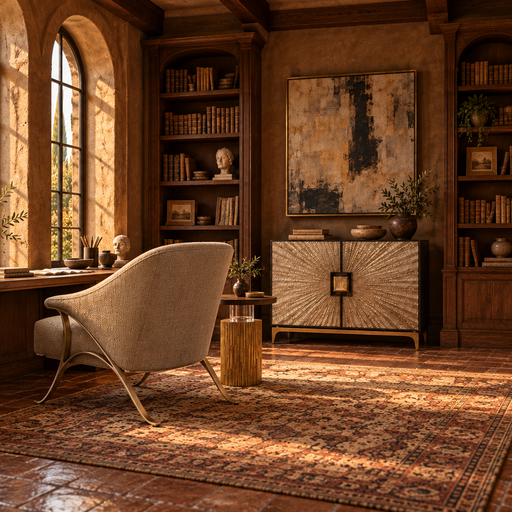 The Villa Library
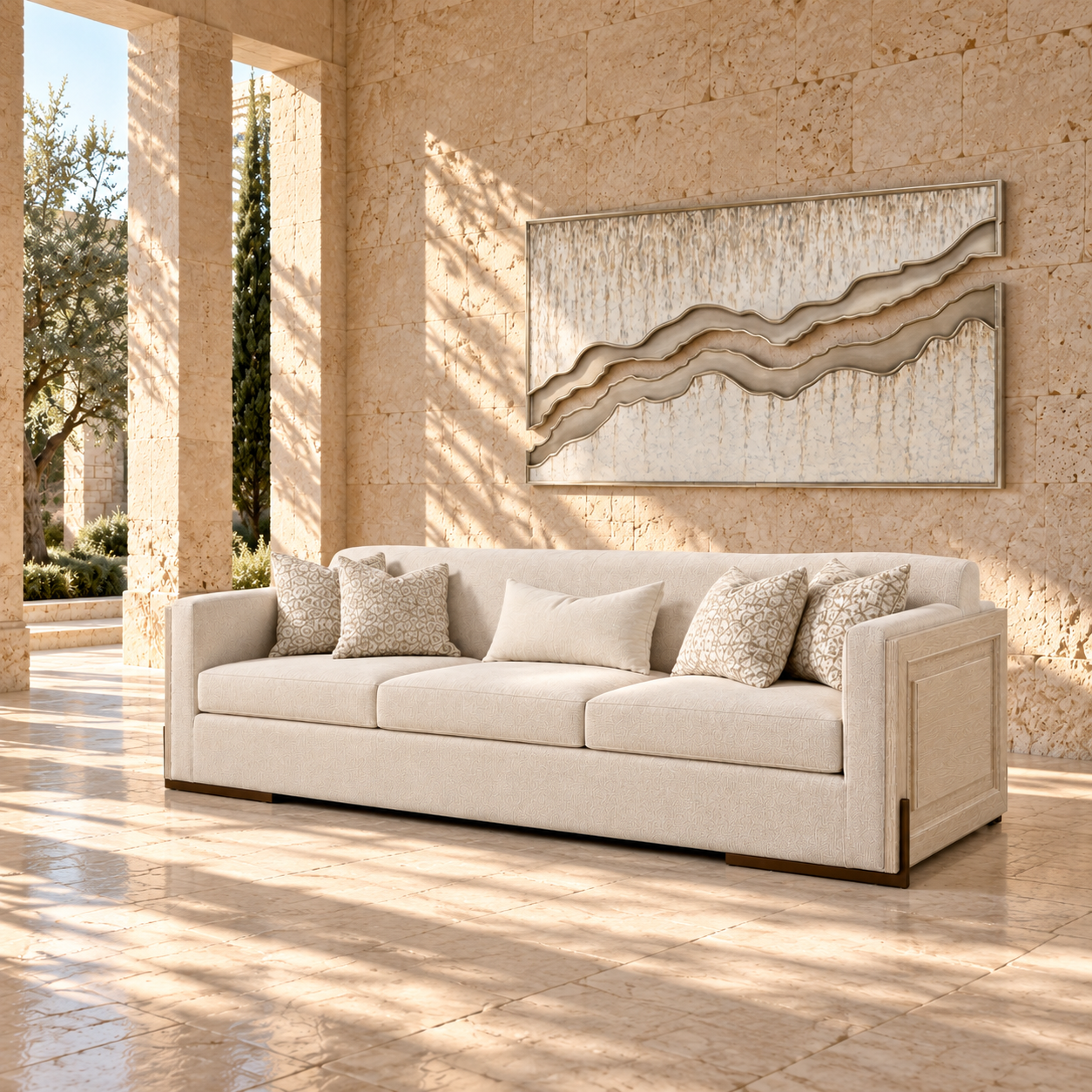 Sofas
Sofas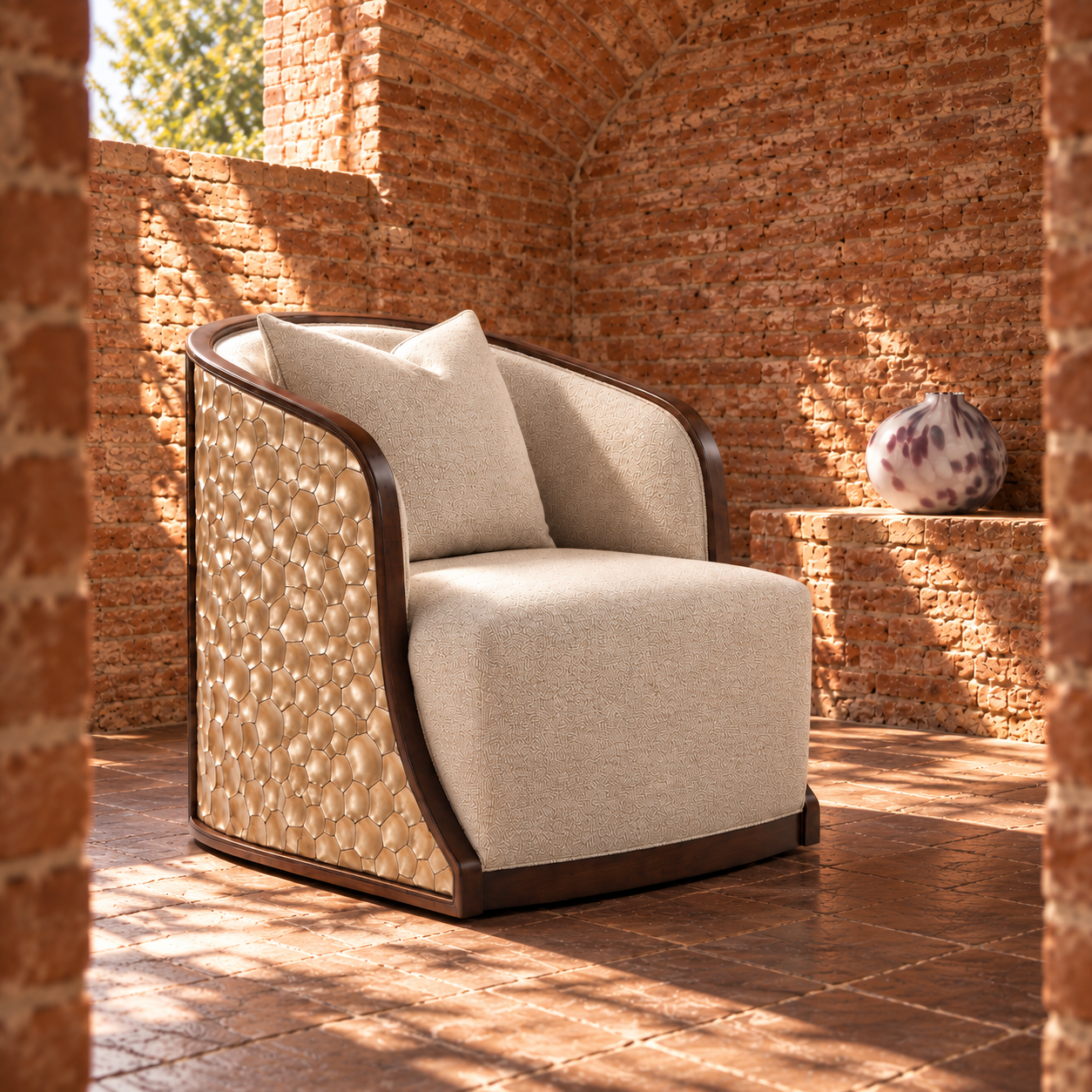 Armchairs
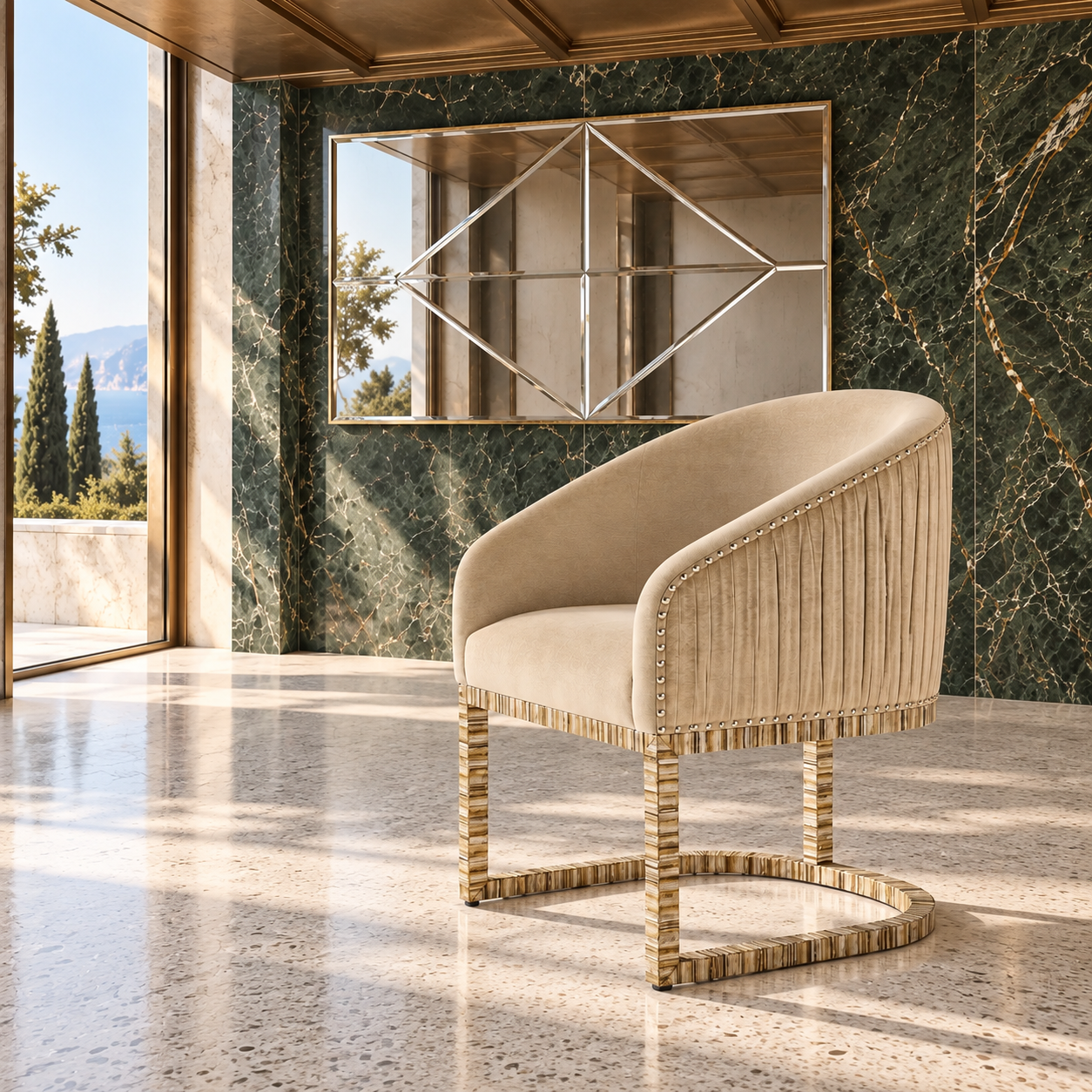 Dining chairs
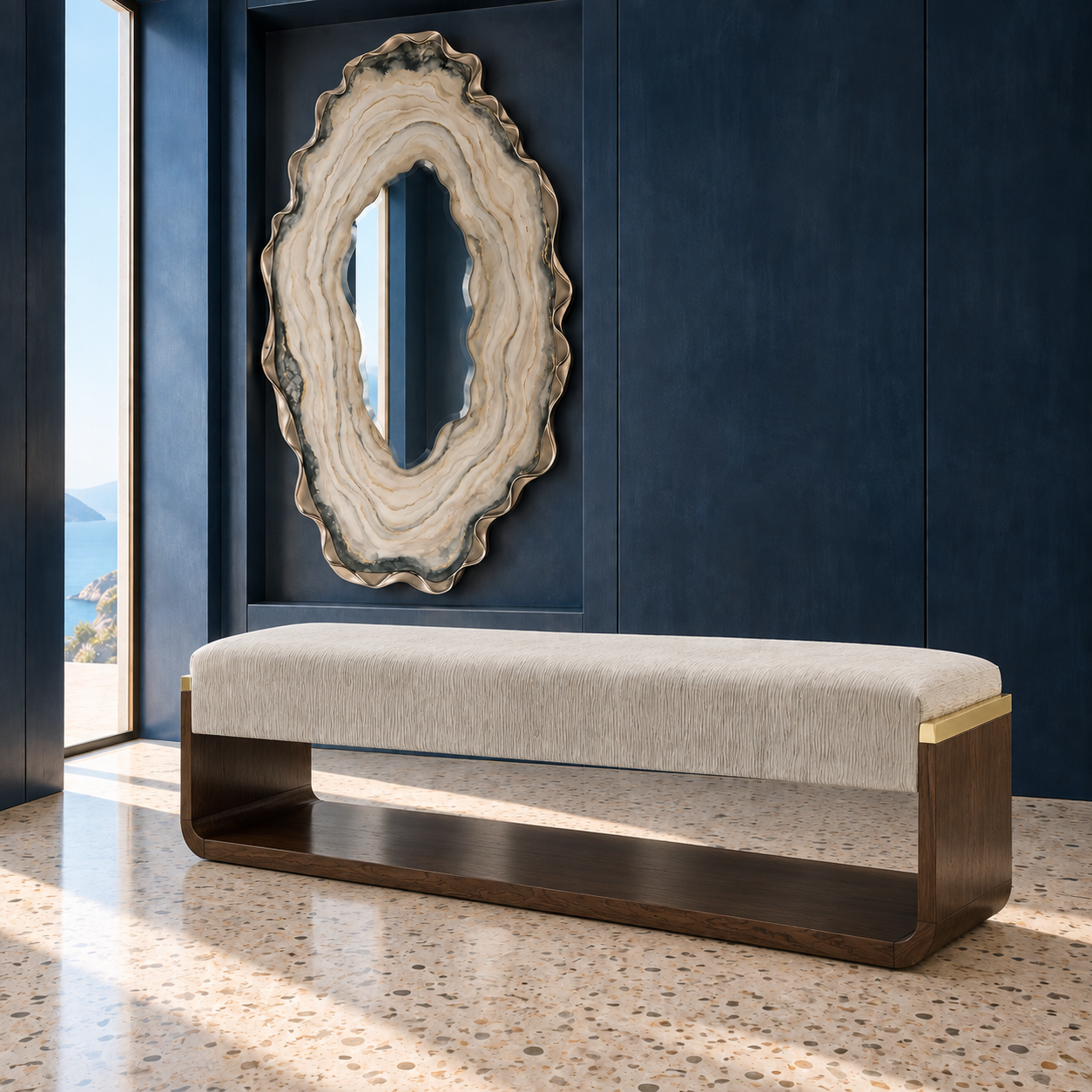 Stools & benches
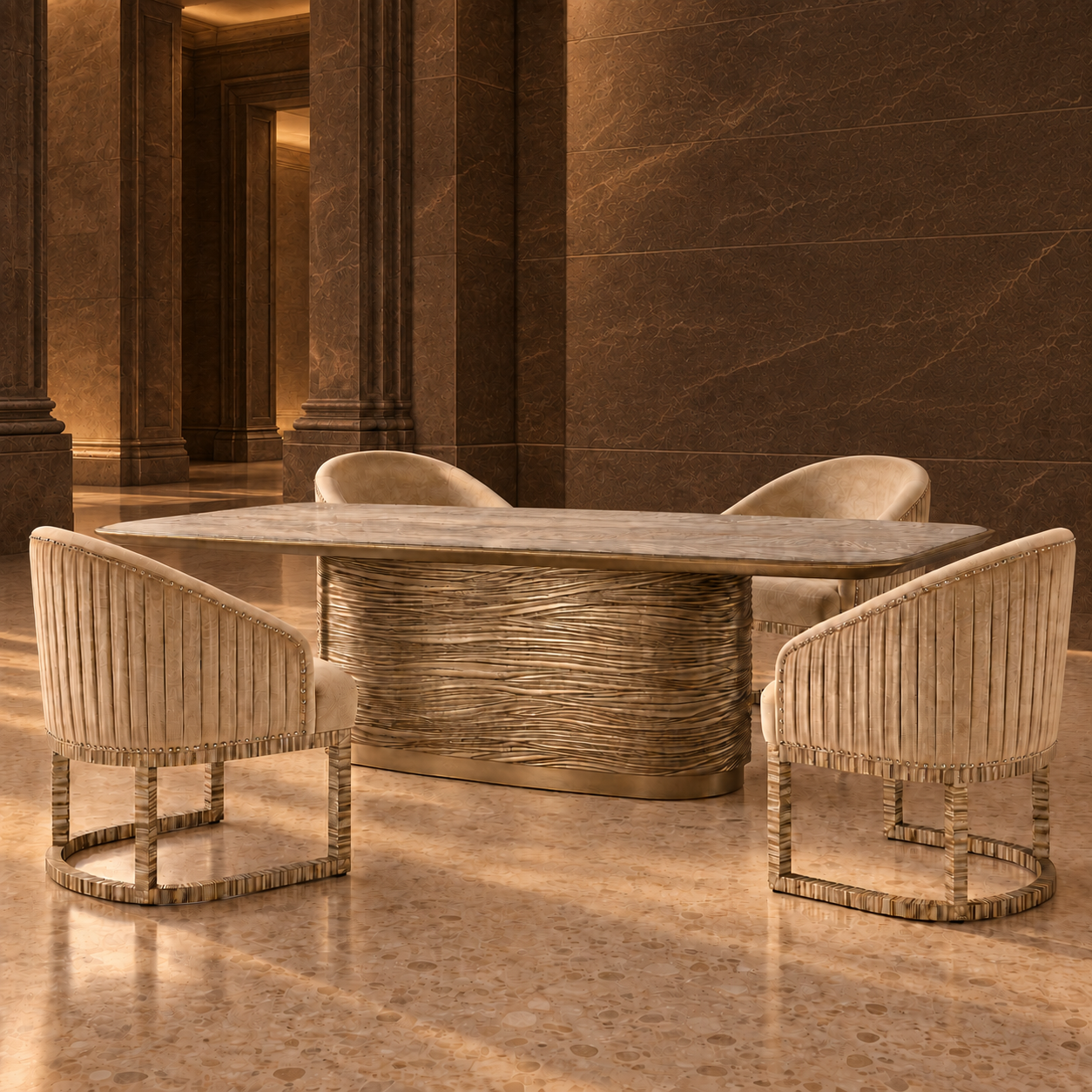 Dining tables
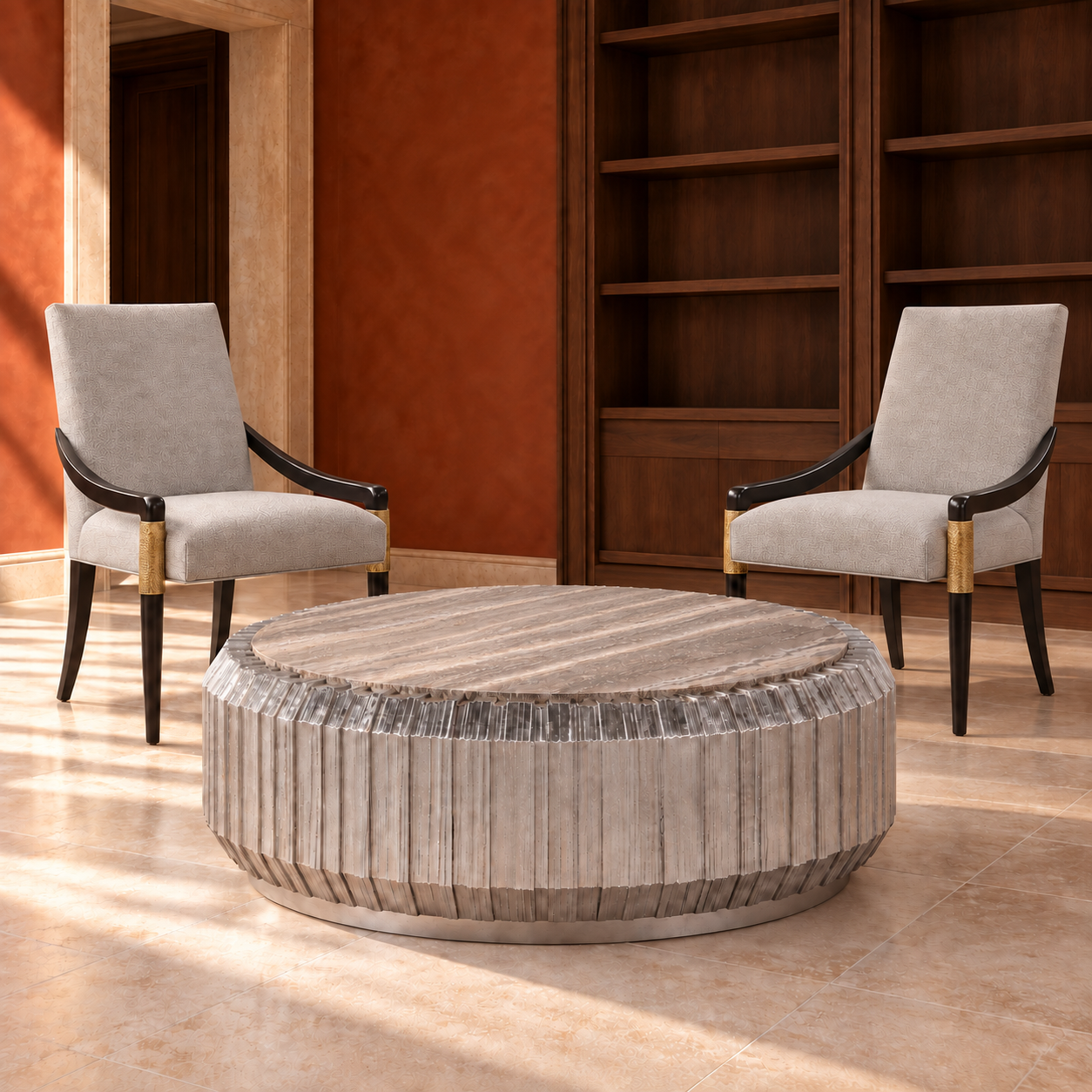 Coffee tables
 Side tables
 Consoles
 Cabinets
 Sideboards
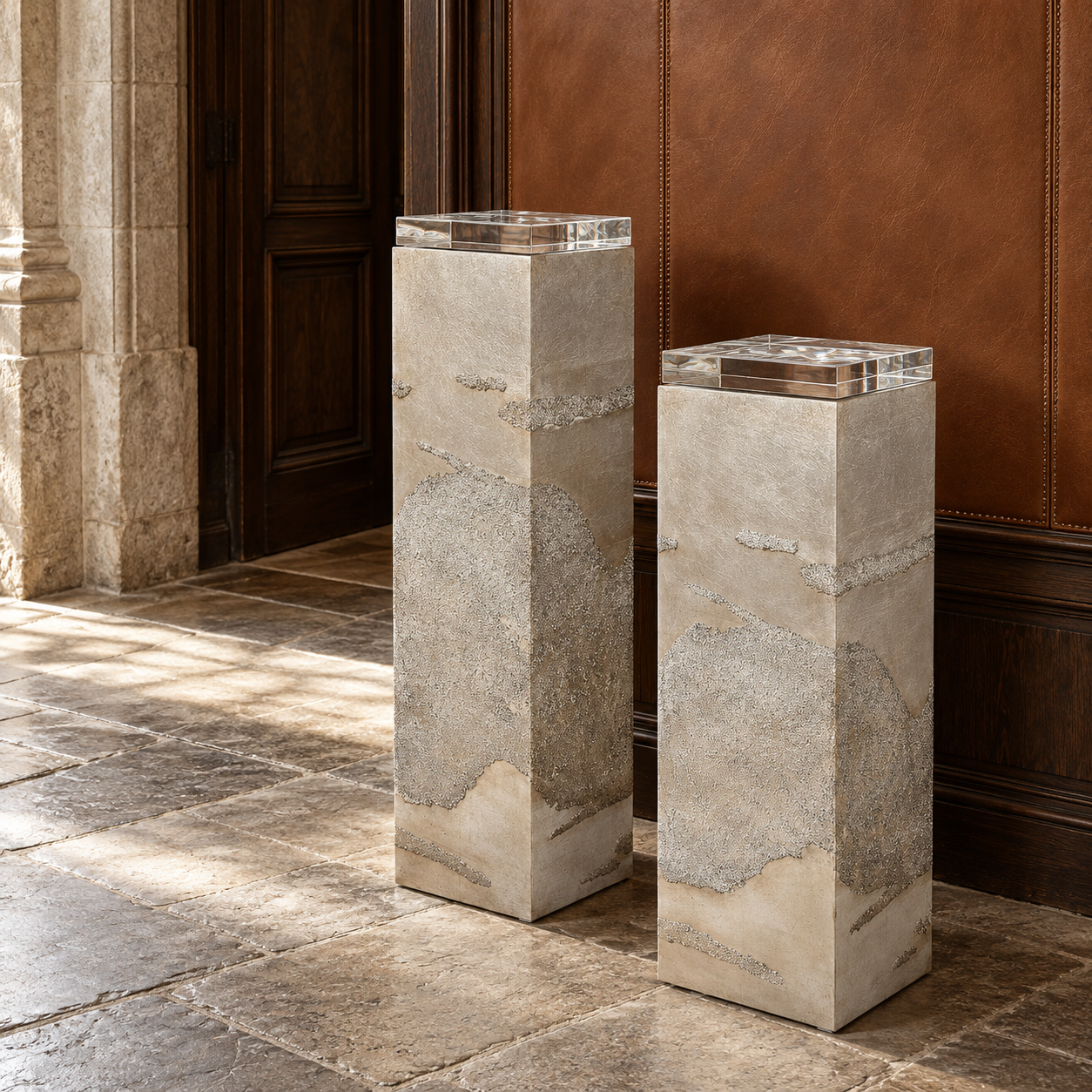 Pedestals
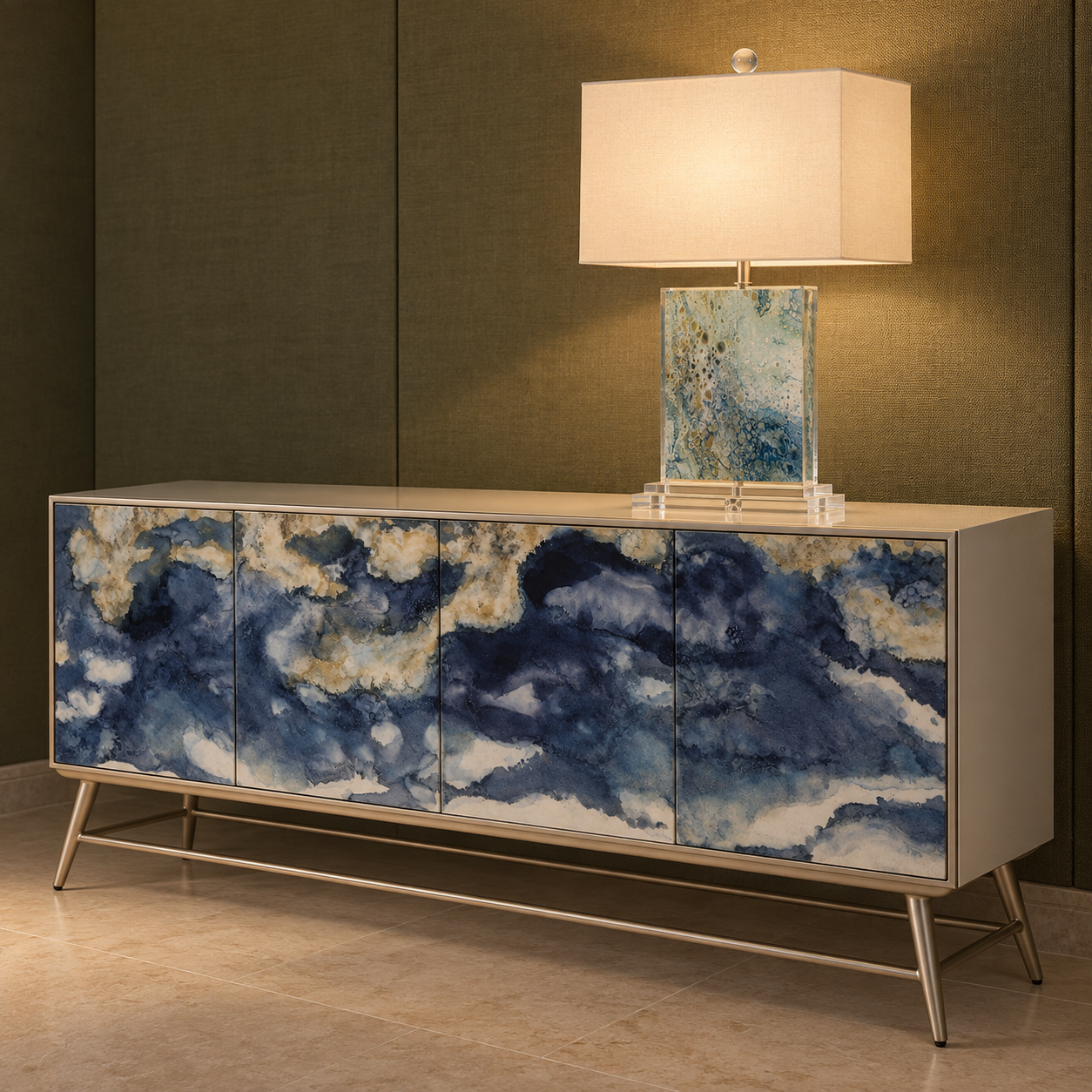 Table lamps
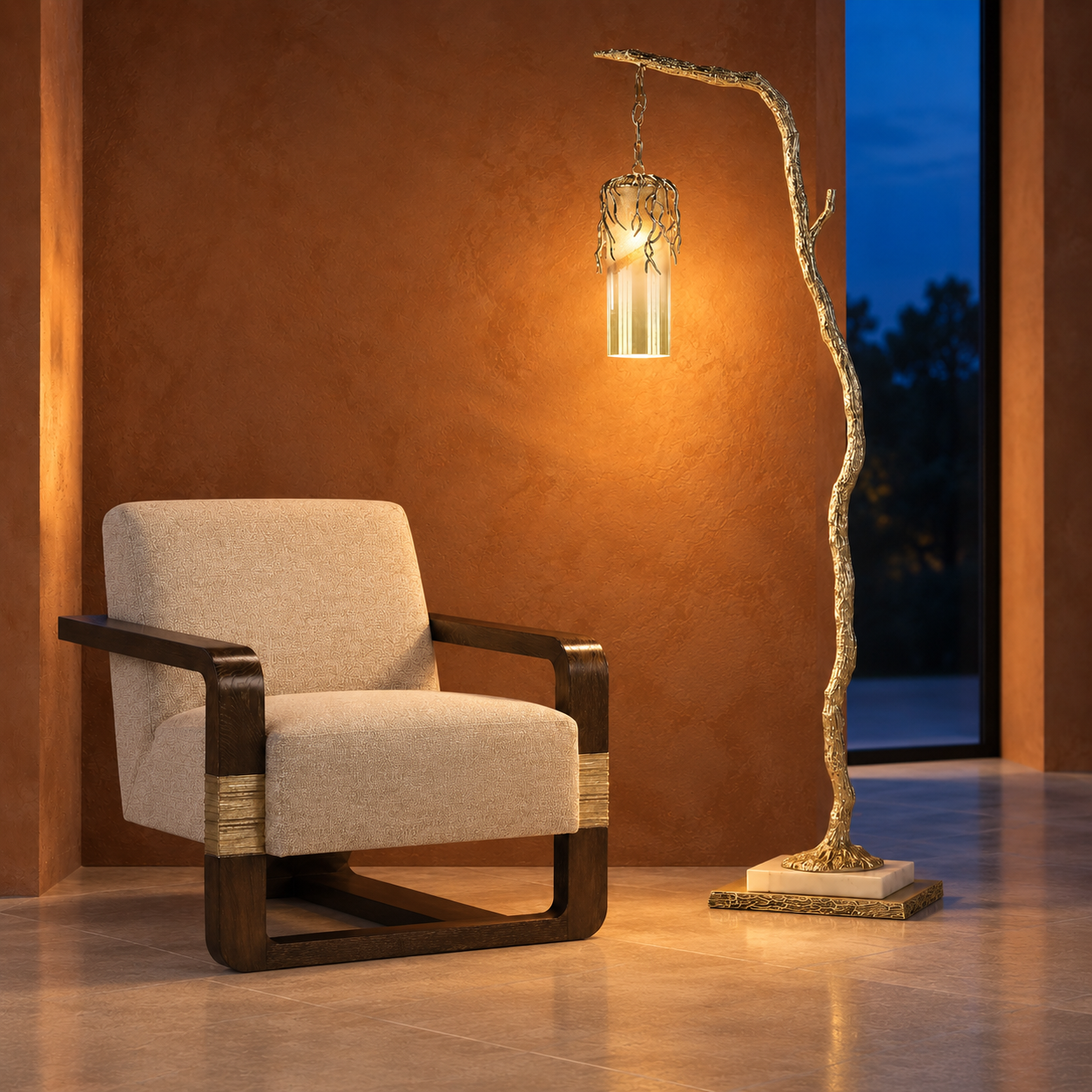 Floor lamps
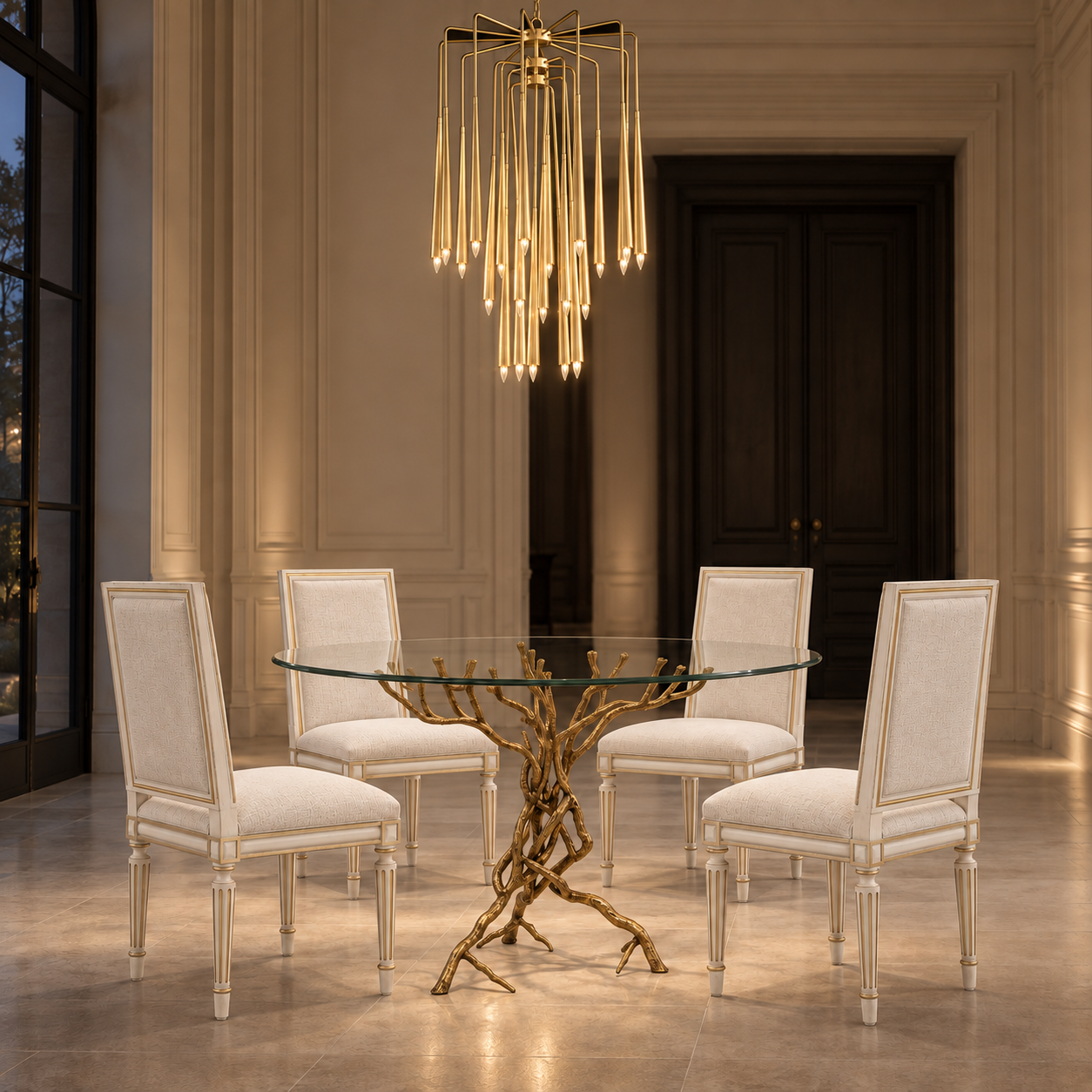 Chandeliers
 Sculpture
 Vessels
 Mirrors
 Wall art
 Decorative objects
 Botanicals
 Collections
 Commercial & Hospitality
 Studios & Makers
 Journal
 About
About Contact
 Made to Order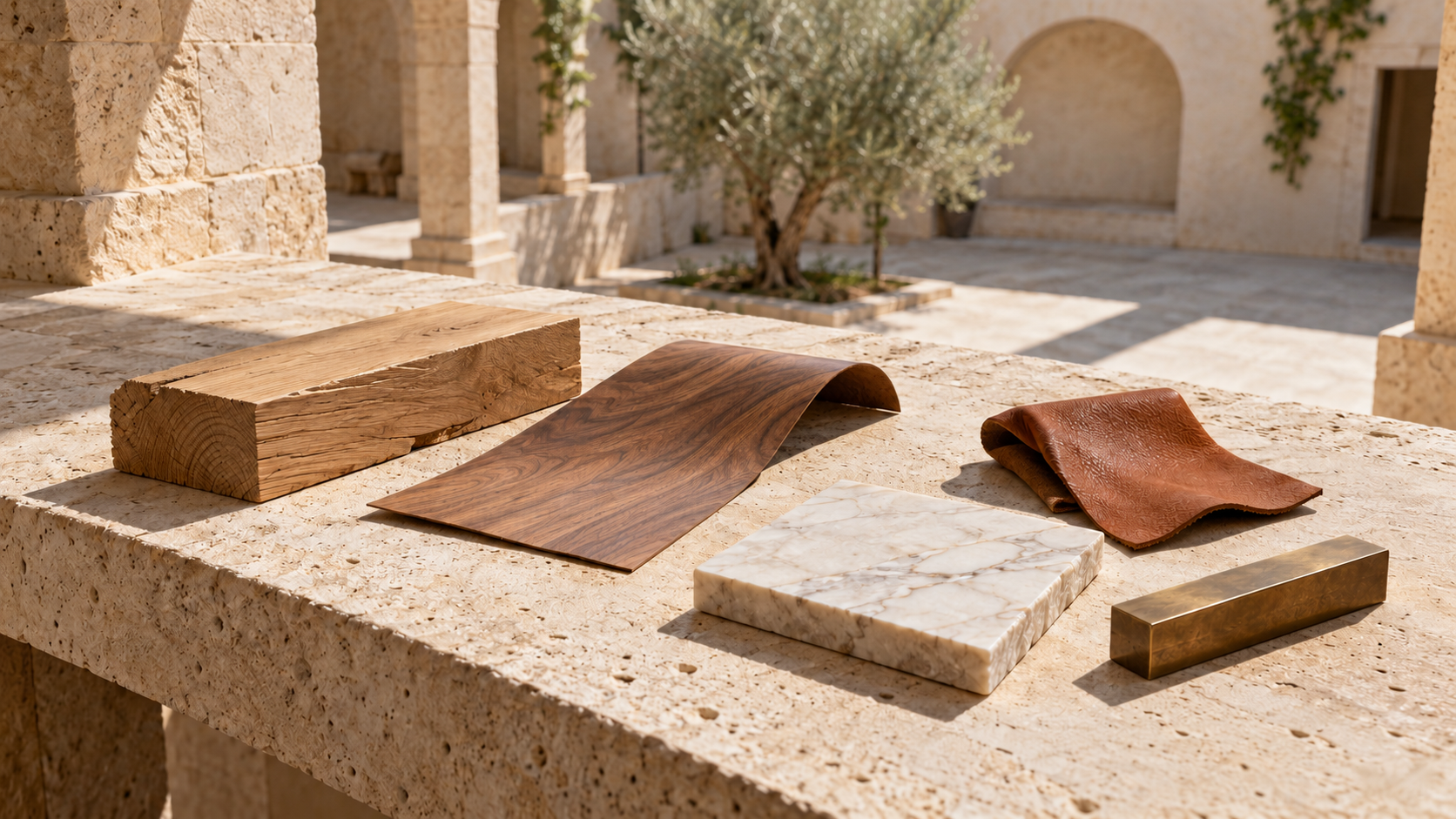
Timber: more than hardness
Hardness describes resistance to indentation. It does not establish the quality of a frame, the stability of a panel or the protection offered by its coating.
Timber exchanges moisture with the surrounding air and changes dimensions as its moisture content changes. Makers must account for that movement through material preparation, component selection and construction. A finish can slow moisture exchange; it does not stop it.3
There is no single moisture figure suitable for every workshop and every destination. The intended indoor conditions matter.
Ask about the species and the construction. The name of a timber is useful, but it cannot describe the whole piece.
Veneer belongs to cabinetmaking
Veneer is a thin layer of wood bonded to a supporting material. It allows grain to be arranged across a surface and makes decorative use of figured timber.
In bookmatching, adjacent veneer leaves are opened like pages to create a mirrored pattern. The supporting panel, adhesive, edge construction and balancing of the panel all affect the result.
Cabinetmaker Tage Frid described veneer as a means of achieving effects that solid timber alone could not provide. His work is a useful reminder that veneer is a making technique, not a quality grade.4
Its condition still matters. Thin veneer limits how much timber can be removed during refinishing. Assessment belongs with someone who understands the surface and what supports it.
Leather and cloth
Leather's grain and its finish are separate questions.
Aniline leather keeps the natural grain visible and may have no coating or a non-pigmented coating. Semi-aniline leather carries a finish with a small amount of pigment while retaining visible grain. Pigmented finishes conceal the natural grain or surface.5
These descriptions do not establish every aspect of quality or care. Ask about the specific leather, its protective finish and its response to light and spills.
With cloth, abrasion testing provides one piece of evidence. A Martindale result records performance under a particular rubbing test; it is not a prediction of years in a home. The Association for Contract Textiles explicitly cautions against treating high abrasion results as an indication of lifespan.6
Weave, seam performance, pilling, colourfastness and cleaning requirements also belong in the decision.
Stone: distinguish stains from etching
Marble, limestone and travertine are calcareous stones. Acids can alter their surface, leaving an etched mark. That is different from a stain entering the stone.
An impregnating treatment may improve stain resistance without making the surface stain-proof. It does not make acid-sensitive stone immune to etching.7
Commercial stone names are not always sufficient to establish composition. Ask what the stone actually is, whether voids have been filled and what care is specified.
Honed and polished describe surface treatments. Neither removes the need to understand the material beneath them.
Metal: identify what lies beneath
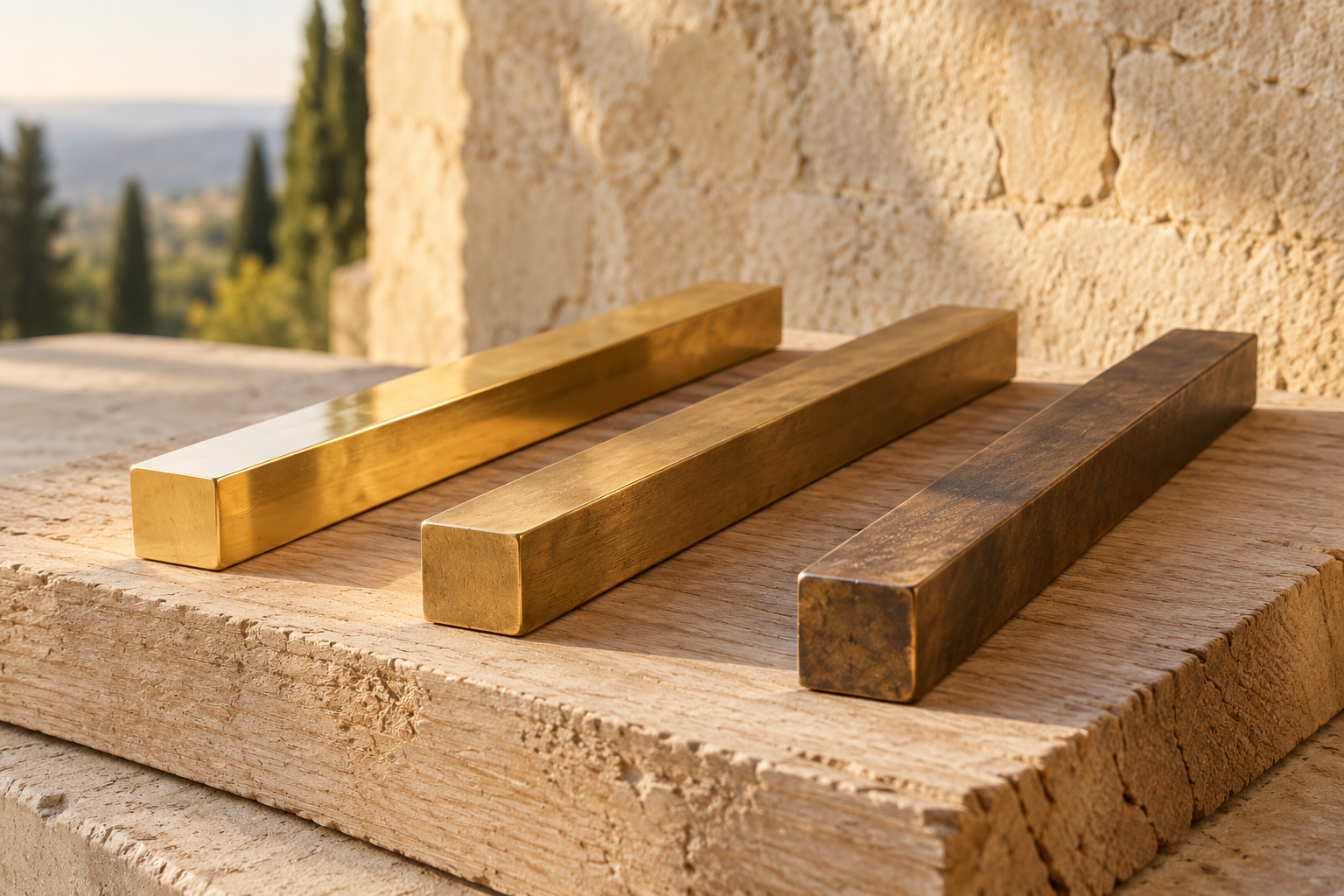
A gold-coloured surface might be solid brass, a plated metal, metal leaf or a coloured coating. Appearance alone cannot settle the question.
Ask about the base material and the surface treatment separately. A lacquer or other clear coat can change how a metal ages and how it should be cleaned.
Patina may develop through exposure or be applied during finishing. Its appearance does not establish age. Whether it can be repaired depends on the material and the treatment used.
Finishes: appearance, protection and repair
A finish changes how a material looks, offers protection and provides a surface that can be cleaned. Its suitability depends on the coating, the substrate and the use it will encounter.8
Matt, satin and gloss describe sheen. They do not independently establish resistance to heat, scratches or moisture.
Oil and wax. Traditional drying oils cure chemically and bring out timber's colour. Modern oil-labelled finishes may contain other ingredients. Wax may be used alone or over another coating. Neither word provides a complete maintenance instruction.
Shellac and French polish. Shellac is a natural resin. French polishing builds a surface with successive applications using a cloth pad. Its care and repair require attention to the actual coating and its condition.
Lacquer and varnish. These names cover different formulations. Some coatings dry mainly through solvent evaporation; others cure by chemical reaction. A glossy appearance cannot identify which is present.9
Polyurethane and hardwax oil. Commercial formulations differ. Ask for the specified coating and approved care method before assuming that a mark can be repaired locally.
Resistance and repairability both matter. The right balance depends on the piece and the way you intend to use it.
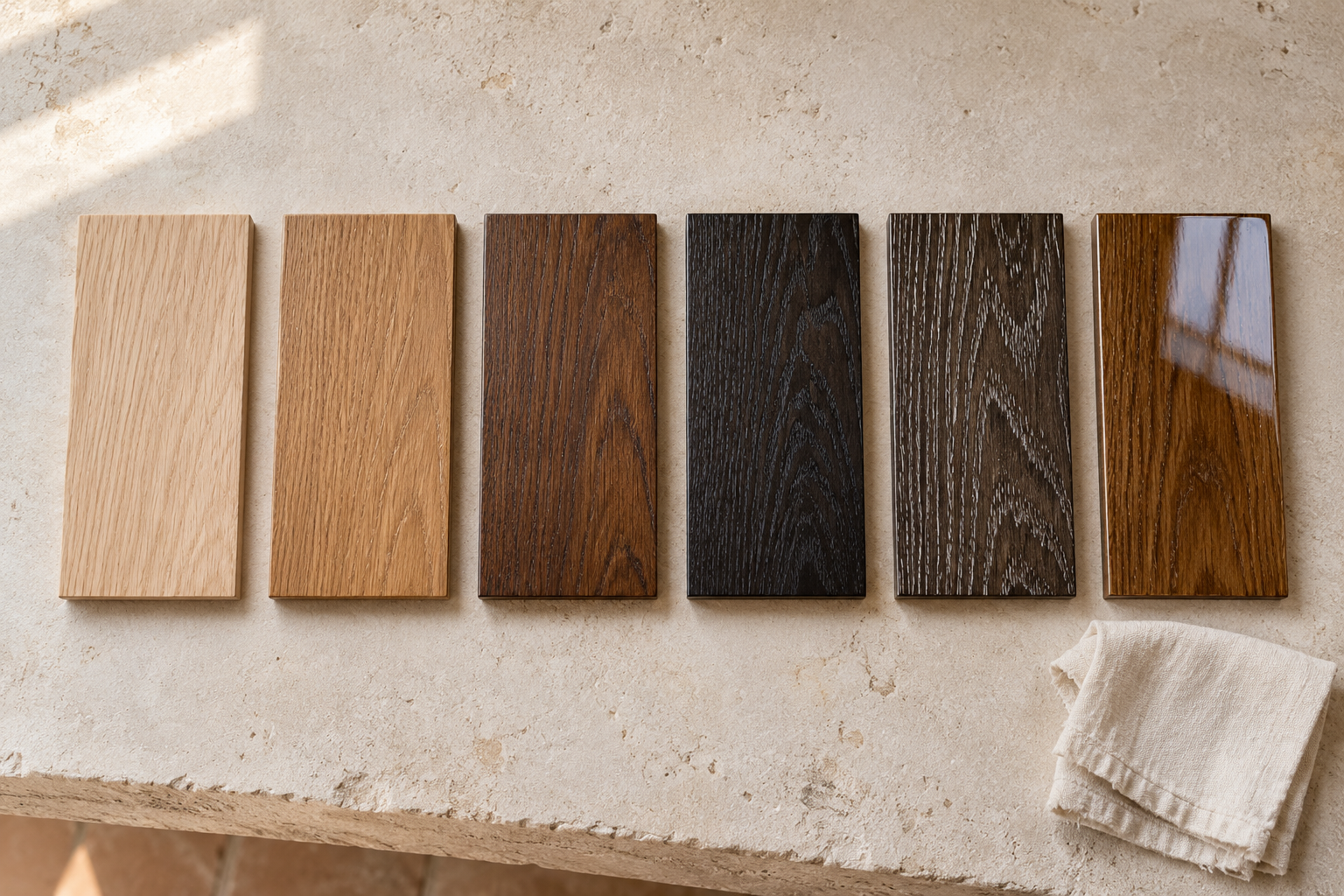
Colour within the grain
Fuming can darken oak through a reaction between ammonia and tannins. One form of ebonising uses an iron-and-tannin reaction to produce dark colour. These are specialist workshop processes; their results depend on the wood and the method.10, 11
Cerusing emphasises open grain with contrasting pigment. The decorative effect and the protective coating should be identified separately.
Traditional Asian lacquer is another distinct finishing tradition, using tree sap in successive thin layers. It should not be confused with every contemporary coating called lacquer. Getty's conservation work shows why the composition of a finish matters to its ageing and treatment.12
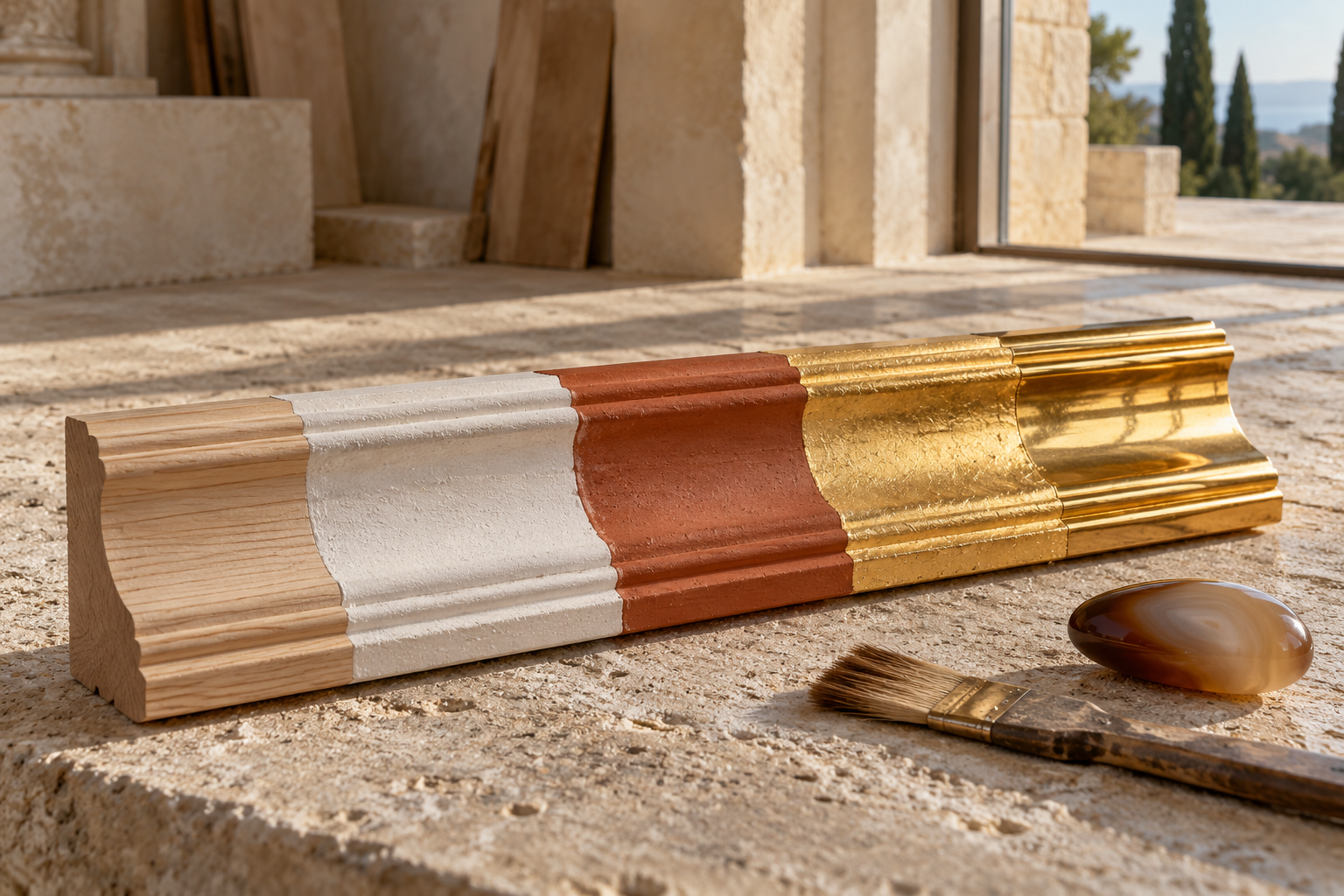
Metal leaf
Water gilding builds a prepared ground beneath metal leaf. In the traditional process demonstrated by the V&A, gesso prepares the timber before gold leaf is applied and burnished.13
Gold-coloured leaf is not always gold. Ask whether the description refers to gold, silver or another metal leaf, and how the surface is protected.
Repair should preserve the sound original surface where appropriate. The treatment depends on the ground, the leaf and any later coatings; it is work for a specialist.14
Care begins with identification
There is no universal polish suitable for every piece. Adding oil or wax to an unidentified finish may create problems rather than solve them.
Begin with the maker's instructions. If the surface is damaged, flaking or unknown, seek specialist advice before treating it.
John-Richard's published furniture guidance advises avoiding extremes of temperature and humidity, using protective pads beneath objects and lifting accessories rather than sliding them. It also advises against solvents and abrasives on furniture and decorative hardware. Specific instructions accompanying a piece should be retained.15
What to ask
- What is the material beneath the visible surface?
- What finish has been used, beyond its colour and sheen?
- What changes should be expected with use?
- How can damage be assessed and repaired?
- What care instructions accompany the piece?
A material becomes easier to live with when its behaviour is understood.
Sources
- USDA Forest Products Laboratory, Wood Handbook
- Tage Frid, Veneering over a solid-wood substrate, Fine Woodworking (1993)
- Leather Working Group, Essential leather industry terms
- Association for Contract Textiles, Abrasion disclaimer
- Natural Stone Institute, Care of natural stone
- Christopher G. Hunt, Finishing wood, Wood Handbook chapter 16, USDA Forest Products Laboratory (2021)
- Canadian Conservation Institute, Care of furniture finishes
- Popular Woodworking, Fuming finish
- Popular Woodworking, Ebonizing wood
- Getty, Lacquer art conservation
- Victoria and Albert Museum, How was it made? Water gilding
- Victoria and Albert Museum, Conservation Journal 39: the gilded objects treated for the British Galleries
- John-Richard, Frequently asked questions